Argument Of Fact: The Case Of The Musician
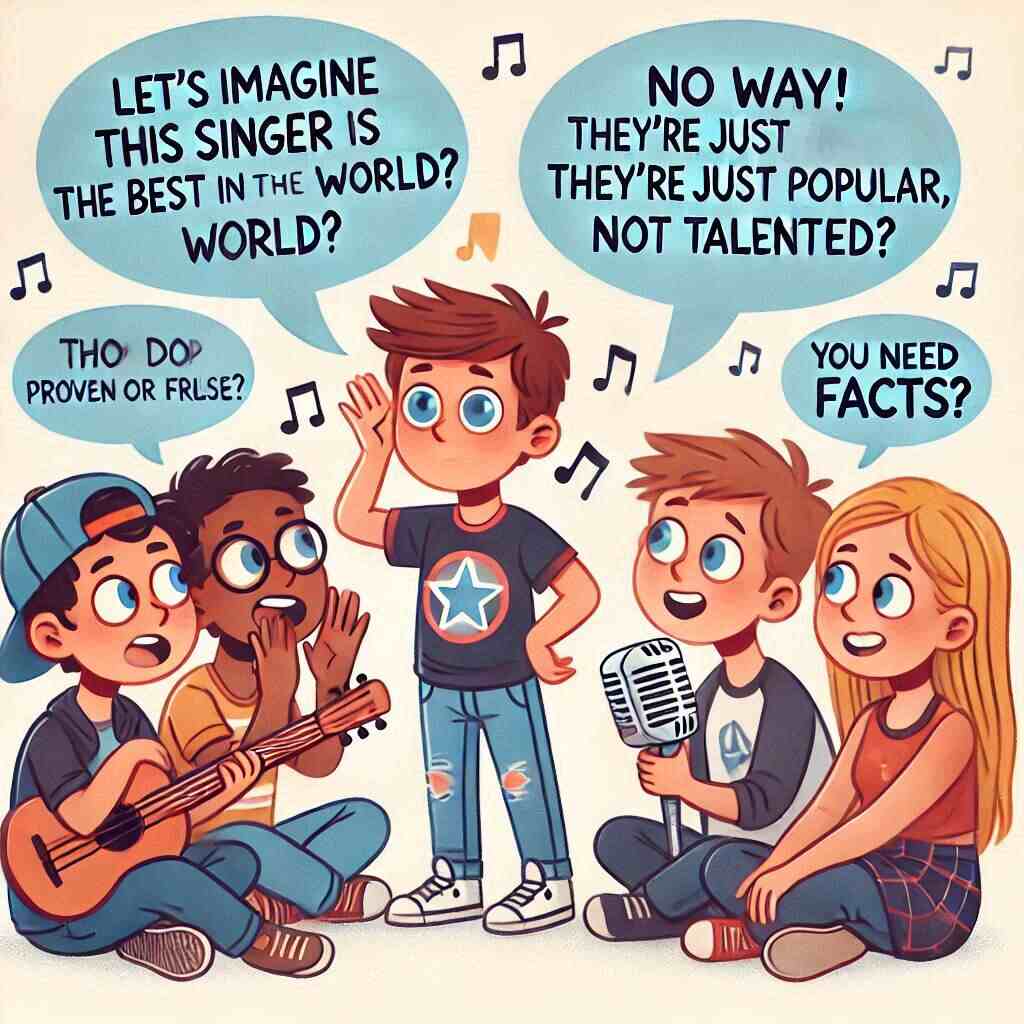
Let’s imagine you’re talking with your friends about a musician. One of you says, “This singer is the best in the world!” Another disagrees, saying, “No way! They’re just popular, not talented.” But how do you figure out who’s right? You need facts—things that can be proven true or false, like how many people listen to their songs or how many awards they’ve won.

| Category | Example/Fact | Why It Matters |
|---|---|---|
| Album Sales | Alex sold 1 million copies of their debut album. | Indicates financial success and fan support. |
| Streaming Numbers | Alex’s hit song reached 100 million streams on Spotify in 6 months. | Shows widespread popularity and reach online. |
| Concert Attendance | Alex performed at a 5,000-seat venue, but only 3,000 tickets were sold. | Highlights a potential gap between online and offline fan engagement. |
| Awards Won | Alex won a “Best New Artist” award at a major music event. | Recognizes talent, creativity, and industry respect. |
| Social Media Followers | Alex has 2 million Instagram followers but only 500,000 active monthly listeners on Spotify. | Reflects fan interaction but reveals a possible disparity in actual music consumption. |
| Cultural Impact | One of Alex’s songs became the anthem for a global environmental movement. | Demonstrates influence beyond just music—impact on society and culture. |
| Critic Reviews | Rolling Stone rated Alex’s latest album 4.5/5 stars, praising its “raw emotional power and unique style.” | Provides an expert opinion, boosting credibility in the industry. |
| Fan Opinions | 85% of fans in a survey said Alex’s music “inspires them to be more creative.” | Reflects emotional and personal connection to the artist’s work. |
| Legal Disputes | Alex faced a plagiarism accusation but was cleared after proving originality in their compositions. | Shows the importance of facts in resolving conflicts and protecting artistic reputation. |
| Financial Transparency | Alex earns $0.003 per stream on Spotify, making a total of $300,000 from 100 million streams. | Highlights how streaming revenue compares to traditional album sales. |
This kind of discussion is called an “argument of fact” because it’s based on evidence, not just opinions or feelings.
Let’s dive into what arguments of fact mean, why they’re important, and how they apply to musicians, so even a 10-year-old can become an expert on the topic!
What Is an Argument of Fact?
Think of an argument of fact like solving a mystery. Instead of guessing, you use clues and proof to figure out the truth.
Here’s What Makes It Special:
- It’s Based on Evidence: Like counting how many people bought a musician’s album.
- It Can Be Proved or Disproved: For example, “This musician sold one million albums!” is either true or false based on sales numbers.
- It’s Logical: You connect the facts step by step, like solving a puzzle.
Why Do Arguments of Fact Matter in Music?
Arguments of fact help us answer big questions about musicians, like:
- Are they really talented?
- How successful are they?
- Have they changed the world with their music?
For example, if someone says, “This singer is the most popular,” you can look at how many people stream their music online or how many concerts they sell out.
A Musician’s Story: Meet Alex
Let’s imagine a musician named Alex.
- Alex is an independent artist, meaning they’re not signed to a big music company.
- They have millions of streams on Spotify but struggle to get people to attend their live concerts.
This situation creates an argument of fact:
- Some people might say, “Alex is successful because their songs are streamed so much!”
- Others might argue, “Alex isn’t successful because they can’t fill concert halls.”
To figure out the truth, we need to look at the facts about Alex’s career.
How Do We Measure Success in Music?
There are many ways to figure out if a musician is doing well.
1. Numbers Don’t Lie! (Usually)
- Album Sales: Did they sell a lot of albums?
- Streaming Counts: How many times have their songs been played on platforms like Spotify?
- Concert Tickets: How many people came to see them perform live?
2. What Do People Say?
- Reviews from Critics: Professional reviewers might say, “Alex’s music is creative and original!”
- Fan Opinions: Fans share their thoughts on social media and online forums.
3. Cultural Impact
- Did their music inspire others?
- Do people still talk about their songs years later?
Fun Fact: Did You Know?
Some of the world’s most famous musicians, like Elvis Presley or The Beatles, were not just popular during their time—they changed music forever! Their songs are still listened to and loved by people of all ages.
Debunking Myths: What’s Not True?
Sometimes people believe things about musicians that aren’t backed by facts. Let’s bust some myths!
Myth 1: If You’re Famous, You’re Rich
- Fact: Many musicians don’t earn much money, even if they’re famous. Streaming platforms pay very little per song played.
Myth 2: High Streaming Numbers Mean Talent
- Fact: Some musicians use tricks, like bots, to make it look like their songs are more popular than they really are.
A Real-Life Example: The Blurred Lines Case
There was a famous legal case about the song “Blurred Lines” by Robin Thicke and Pharrell Williams.
- They were accused of copying another artist’s work.
- The court looked at facts like music notes and rhythms to decide if it was true.
- In the end, they had to pay $5 million!
This shows how arguments of fact aren’t just about opinions—they can even decide legal battles.
How Do Fans and Critics Play a Role?

Critics:
Critics write detailed reviews about a musician’s work. They might say:
- “The lyrics are meaningful.”
- “The music has a unique sound.”
Fans:
Fans might argue based on how a musician makes them feel. They’ll say things like:
- “Alex’s music makes me happy!”
- “This song helped me through a tough time.”
Even though fans’ opinions are emotional, they add to the overall discussion about a musician’s success.
Technology’s Role in Music Arguments
Technology changes how we think about music.
- Streaming Services: Platforms like Spotify and Apple Music let us see how many times a song has been played.
- Social Media: Musicians connect with fans directly, but arguments can spread quickly if people share incorrect information.
Quick Facts Table: Success in Music
| Measure of Success | Example | Why It Matters |
|---|---|---|
| Album Sales | Sold 1 million copies | Shows people are willing to buy music. |
| Streaming Numbers | 100 million streams on Spotify | Reflects popularity online. |
| Awards Won | Grammy Awards | Recognizes talent and hard work. |
Why Arguments of Fact Matter for Kids
Even as a 10-year-old, you’ve probably heard debates about who’s the best singer or band. Learning how to use facts helps you:
- Think Critically: Instead of guessing, you can find proof.
- Be Fair: You won’t believe everything you hear—only what’s true.
- Solve Debates: Imagine winning an argument with your friends because you have all the facts!
Conclusion: The Power of Facts
Arguments of fact are like using a magnifying glass to see things clearly. In music, they help us understand who’s truly talented, successful, or influential. The next time you hear someone argue about a musician, remember to look for the facts—they always tell the real story!
FAQs for Curious Minds
- What’s an argument of fact?
It’s a claim based on proof, like numbers or evidence, instead of opinions. - How do we measure a musician’s success?
By looking at album sales, streams, awards, and cultural impact. - Can streaming numbers be trusted?
Not always—some musicians use bots to increase their numbers. - What’s a famous argument of fact in music?
The “Blurred Lines” case, where musicians were accused of copying another artist’s work. - Why are facts important in music?
They help us understand who’s really talented and successful. - How does technology affect music arguments?
It provides data but can also spread misinformation. - What’s the difference between a critic and a fan?
Critics focus on details and facts; fans talk about feelings. - Can opinions be part of an argument of fact?
Opinions can add color, but facts are what prove the truth. - Why don’t all famous musicians make a lot of money?
Streaming services pay very little per song played. - How can kids use arguments of fact?
To think smart, be fair, and win debates with proof!