GDP Deleted Scenes: Illuminating The Shadows Of The Unseen Economy
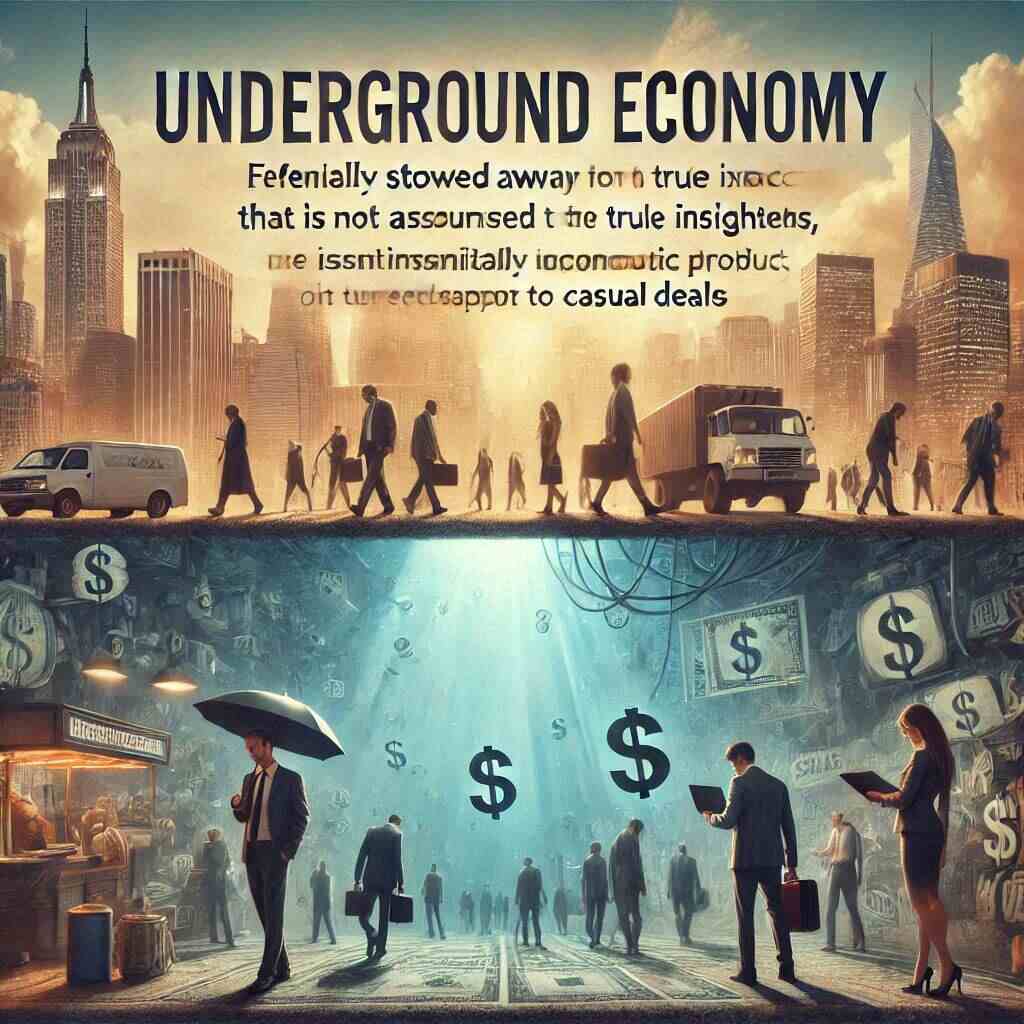
The underground economy, frequently stowed away from true insights, essentially influences the Gross Domestic Product (Gross domestic product) estimations. This area incorporates all financial exercises that are not answered to the public authority, enveloping everything from under-the-table work to casual deals. Understanding this uncharted segment is crucial as it affects economic analysis and policy-making, offering a more comprehensive view of the economic landscape often referred to as a “GDP deleted scene.”
| Aspect | Details | Key Takeaway |
|---|---|---|
| Impact of the Informal Sector on GDP | – Significant contributor to GDP in developing countries. – Large reliance on informal employment. | Informal contributions remain unquantified, creating gaps in economic strategies—a “GDP deleted scene.” |
| Non-Reported Economic Activities | – Includes activities like street vending and freelancing. – Evades governmental reporting. | Exclusion leads to underestimation of a nation’s economic health, akin to a “GDP deleted scene.” |
| Effects of the Shadow Economy | – Circumvents taxation and regulations. – Supports livelihoods but challenges fiscal policies and revenues. | A critical, elusive segment influencing the economy, reflecting a “GDP deleted scene.” |
| Omissions in GDP Calculations | – Excludes underground economic activities. – Results in inaccuracies in assessing economic well-being. | Integrating estimates would provide a fuller economic picture and correct the “GDP deleted scene.” |
| Inaccuracies in Economic Data | – Relies on incomplete data due to excluded activities. – Affects economic planning and stability. | Aligning policies with hidden sectors can mitigate these inaccuracies, fixing the “GDP deleted scene.” |
| Valuing the Black Market Economy | – Includes illegal activities like drug sales and unlicensed trade. | Understanding its scale aids in policy-making and enforcement while revealing another “GDP deleted scene.” |
| Unrecorded Labor Statistics | – Informal jobs lack contracts and social security. – Labor force data remains incomplete. | Omissions hinder labor policy formulation and workforce support, another “GDP deleted scene.” |
| Hidden Economic Sectors | – Includes informal caregiving, artisanal crafts, and local farming. | Acknowledging these could integrate them into formal systems, addressing an overlooked “GDP deleted scene.” |
| Alternative Economic Indicators | – Proposals include measures like the Genuine Progress Indicator (GPI). – Focus on well-being and sustainability over traditional GDP. | Provides a holistic view of economic progress, capturing factors excluded in the “GDP deleted scene.” |
Impact of the Informal Sector on GDP
The informal sector plays a significant role in GDP contributions, particularly in developing economies where a substantial portion of the population relies on informal employment. Despite this, these contributions often remain unrecorded in official GDP figures. Recognizing the informal sector’s economic influence could lead to policies that better support these workers and acknowledge their value, revealing what could be called another “GDP deleted scene.”
Non-Reported Economic Activities
- Definition and Examples
Non-reported economic activities involve the production and exchange of goods or services that evade government oversight. Examples include street vending, freelance work, and small-scale farming. - Impact on GDP Figures
The exclusion of these activities results in an incomplete representation of a nation’s economic activity, potentially underestimating its true economic strength, much like a “GDP deleted scene.”
Effects of the Shadow Economy
- Understanding the Shadow Economy
The shadow economy includes unregulated and untaxed activities such as informal businesses, untaxed labor, and off-the-record transactions. - Benefits and Challenges
While it provides income and services to many, it undermines fiscal policies and reduces government revenue, presenting challenges akin to a “GDP deleted scene.”
Omissions in GDP Calculations
- Traditional GDP Limitations
GDP calculations traditionally exclude underground and informal activities, leading to an incomplete assessment of a country’s economic output. - Implications
Incorporating estimations of these omitted activities could enhance economic accuracy, informing better policy decisions and addressing overlooked contributors to the economy, correcting what is often a “GDP deleted scene.”
Inaccuracies in Economic Data
- Exclusion of Underground Activities
The absence of data from hidden economic sectors results in inaccurate economic forecasting and planning. - Policy Implications
Without a full picture, economic strategies may fail to address the actual needs of the population, perpetuating the narrative of a “GDP deleted scene.”
Valuing the Black Market Economy
- Definition and Examples
The black market encompasses illegal activities such as drug sales, unlicensed goods trading, and counterfeit operations. - Economic Implications
While detrimental in many respects, the black market represents a significant portion of unrecorded economic activity. Understanding its scope could aid in crafting policies that mitigate its adverse effects, shedding light on another “GDP deleted scene.”
Unrecorded Labor Statistics
- Omissions in Labor Data
Many informal jobs lack contracts or social security, leading to underreported labor statistics. - Consequences for Workers
These omissions hinder efforts to improve labor conditions and create policies that effectively support informal workers, effectively creating a “GDP deleted scene.”
Hidden Economic Sectors
- Examples of Hidden Sectors
Informal caregiving, artisanal crafts, and subsistence farming often operate outside formal economic recognition. - Integration Benefits
Recognizing these contributions could foster support mechanisms to enhance productivity and integrate these sectors into the formal economy, addressing another “GDP deleted scene.”
Alternative Economic Indicators
Proposed Alternatives
Indicators like the Genuine Progress Indicator (GPI) include neglected factors, providing a more comprehensive view of economic progress and addressing the gaps left by GDP, thus acknowledging the “GDP deleted scene.”
Limitations of GDP
Traditional GDP measurements often fail to account for wellbeing, sustainability, and informal sector contributions.
Conclusion
The underground economy, with its vast and varied components, plays an undeniable role in the economic tapestry of nations. By exploring and integrating these hidden sectors into official statistics and economic indicators, policymakers can gain a more accurate understanding of the economic landscape. This integration will enable more effective policies that support all facets of a nation’s economy, paving the way for more inclusive economic growth and development, and bringing to light the essential narrative of the “GDP deleted scene.”
FAQs on GDP Deleted Scenes
- What is a GDP deleted scene?
- A “GDP deleted scene” refers to economic activities that are not included in the official Gross Domestic Product (GDP) calculations. These include informal work, black market transactions, and other non-reported economic activities.
- Why are these activities not included in GDP calculations?
- These activities are typically not included because they are difficult to measure accurately, are illegal, or occur outside the formal economy without official documentation or taxation.
- How significant is the impact of GDP deleted scenes on the economy?
- The impact can be substantial, especially in countries with large informal or shadow economies, potentially leading to significant underestimations of the true economic output and health.
- Can the inclusion of GDP deleted scenes alter economic policy?
- Yes, including these hidden sectors in GDP calculations can provide a more accurate picture of economic activity, influencing fiscal policies, social programs, and labor regulations to be more encompassing and effective.
- What are some common components of the GDP deleted scene?
- Common components include unregistered businesses, informal labor, under-the-table jobs, smuggling, and other transactions that avoid government scrutiny and taxation.
- How can countries measure the GDP deleted scene more accurately?
- Countries can improve measurement by using alternative data sources, such as satellite imagery, electricity consumption patterns, and anonymous surveys that capture informal and illegal economic activities.
- What challenges do governments face when trying to include GDP deleted scenes in official statistics?
- Challenges include the inherent difficulty of tracking and quantifying unregistered economic activities, potential resistance from those operating within the informal economy, and the complexity of distinguishing between legal and illegal activities.
- What are the benefits of recognizing and measuring GDP deleted scenes?
- Recognizing and measuring these activities can lead to more accurate economic indicators, improved resource allocation, better targeted social and economic policies, and a broader understanding of the labor market.
- How does the shadow economy affect employment statistics?
- The shadow economy often results in underreported employment figures, failing to account for a significant portion of the population that is working informally. This can skew unemployment rates and labor market analyses.
- What alternative economic indicators can help reveal GDP deleted scenes?
- Indicators like the Genuine Progress Indicator (GPI) and other metrics that incorporate social, environmental, and economic wellbeing can help reveal the breadth of activities typically missed in traditional GDP calculations.